
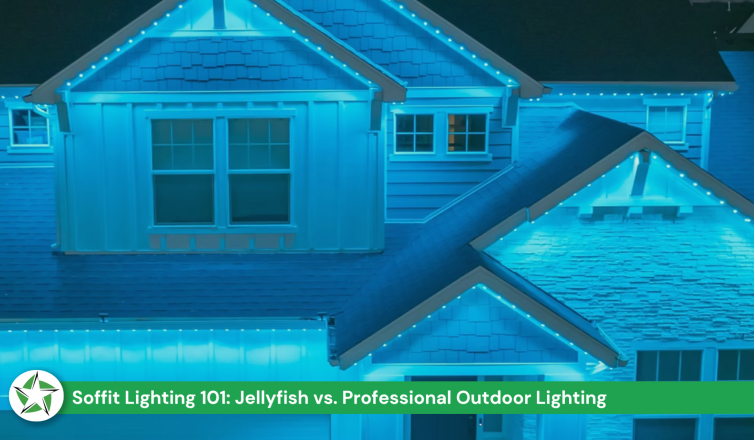
“Jellyfish lights” is a term people often think of when talking about permanent professional outdoor lighting. What they’re searching for is formally referred to as soffit lighting: permanent, app-controlled lights installed under the roofline of a house. JellyFish is a well-known brand that offers soffit lighting, but it is not the only lighting option built for this job. OMNI RGB, the system Lone Star Turf installs, is another popular brand. Both light a roofline; what changes from one to the next is how you get it installed, and who you call once it is up.
JellyFish offers two ways to get their lights: a do-it-yourself kit for homeowners who want to run the wire and set up the app themselves, or a professional install through a third-party dealer. Lone Star Turf only offers one path: a full professional install, done by our own local team from start to finish – the same way we handle your turf.
Here is that at-a-glance:
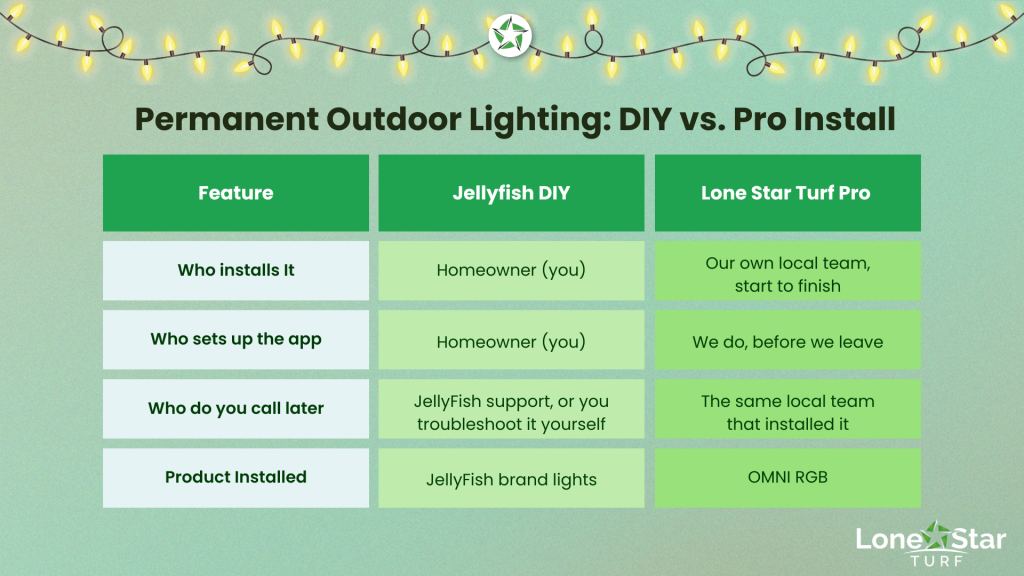
If you would rather run the wire yourself, JellyFish’s DIY kit is a legitimate option, and plenty of homeowners choose it. If you want it handled for you, quote through install and anything that comes up down the road, that is what a professional outdoor lighting install is for, whether that is us or someone else.
This post breaks down what soffit lighting is, where the Jellyfish name comes from, and what changes when a local team installs and maintains it for you instead of doing it yourself.
What Is Soffit Lighting?
Soffit lighting is the general term for permanent, app-controlled lights installed under the roofline of a house, in the soffit or fascia. Lone Star Turf calls this service permanent outdoor lighting. A track of individually addressable LED fixtures runs along the edge of the roof, tucked out of sight during the day. At night, a phone app switches the whole system between colors, schedules, and scenes.
The appeal is straightforward. One install covers the Fourth of July, Halloween, Christmas, game day, and every ordinary night in between. No ladder, no storage bin of tangled string lights, no re-hanging anything each season. For homeowners who already invest in a finished backyard, whether that’s residential turf or turf around a pool, permanent outdoor lighting is the kind of upgrade that keeps paying off long after the install truck leaves.
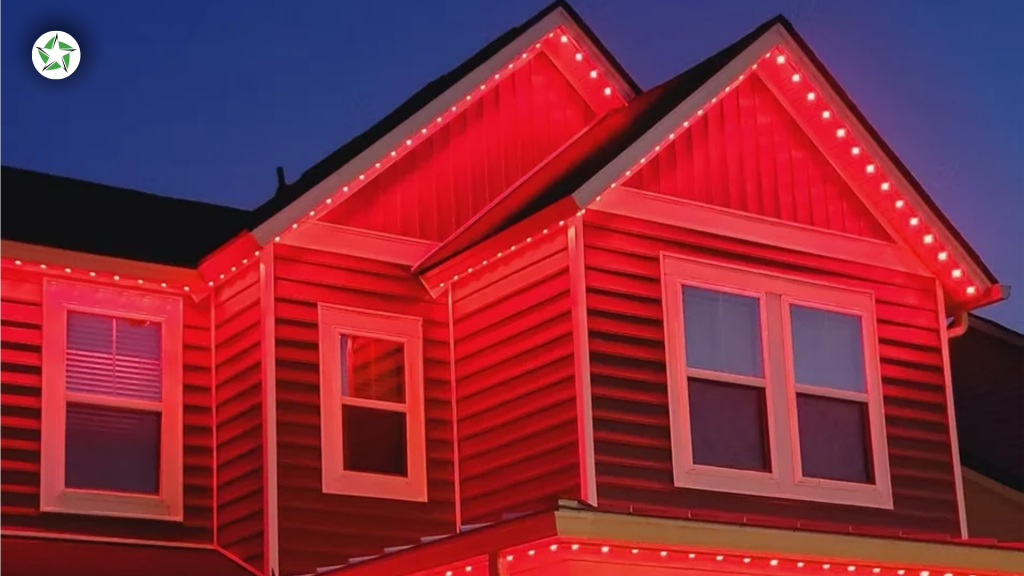
The track itself is designed to disappear. It sits color-matched to the trim, so on an ordinary afternoon a neighbor wouldn’t notice it. At night, the same track can run a single steady color or step through a full sequence, depending on how the homeowner sets it up in the app. Nothing about the hardware changes between a quiet Tuesday and a holiday, but the experience walking by your yard can be completely different at the touch of a button.
Why “Jellyfish” Shows Up in So Many Searches
Jellyfish Lighting was one of the first companies to market this category, and they did an excellent job. The name became attached to the product itself, not just the brand behind it. That pattern is common enough to have a name of its own: a genericized trademark, where a brand becomes the default word for an entire category of product. According to GoDaddy, this same pattern has played out with brand names most people no longer think of as brands at all, from Kleenex to Xerox to the word “googling.” Xerox’s dominance in office copying was so complete that “to Xerox” became shorthand for making a copy, even though Xerox is one company among several that make copiers.
None of that is a knock on Jellyfish Lighting’s DIY Kit. It means the brand name and the product category are not the same thing, and it is worth knowing the difference before comparing quotes. Two companies can install the same general kind of permanent lighting and differ in almost every other way that matters: who shows up, what the warranty covers, and who you call if a section stops working.
When This Usually Comes Up
Many homeowners are not shopping for permanent lighting on its own. It tends to show up alongside a bigger project: a new pool that finally gets used at night, a patio or fire pit built for entertaining, or a backyard that already got the turf and hardscape treatment and needs one more finishing touch. Others start looking after another holiday spent on a ladder, restringing the same lights that came down in a storm the year before.
The trigger is usually the same underlying want: enjoy the house after dark without redoing the work every other month. Warm white for a normal Tuesday, full color for the Fourth of July or a playoff game, and nothing to take down in January.

The Differences That Matter
Jellyfish Lighting operates largely through local dealer and franchise networks. A homeowner books through a regional dealer, and the install, service, and warranty support run through that dealer’s agreement with the parent brand.
There is nothing wrong with working through dealers. It is a common way to scale a product across a lot of markets at once. It’s worth noting that it does mean the person who quotes the job, the crew who installs it, and the company backing the warranty are not always the same entity end to end, and a homeowner following up six months later may be routed through more than one point of contact.
Lone Star Turf installs its OMNI RGB permanent lighting directly. One local team handles the quote, install, and anything that comes up after, without a franchise layer in between. That matters most after the install, when a homeowner has a question about the app, a section that needs attention, or a warranty claim. There is one number to call, and it belongs to the same team that did the work.
OMNI RGB also gives individual control over sections of the roofline, not just the whole system at once. A homeowner can run warm white across most of the house and color across one section for a holiday, instead of an all-or-nothing setup. We covered a similar full-property approach in our San Antonio project roundup, where a Stone Oak backyard paired turf with a fire pit and outdoor lighting for one connected space.
What to Look for in a Permanent Lighting Installer
A few questions are worth asking before choosing an installer:
- Does the same team handle the quote, the install, and service after the sale, or does that get handed off to someone else along the way?
- What does the warranty cover, and for how long?
- Are sections individually controlled, or does the whole roofline turn on and off together?
- What is the fixture rated for in outdoor heat and weather?
- Is a section replaceable on its own, or does a failure mean pulling the whole track?
The answers tend to separate installers more clearly than the lights themselves do. Most systems look similar once they are lit up. The differences show up in ownership, six months or three years down the line.
Inside a Lone Star Turf OMNI RGB Install
Lone Star Turf’s OMNI RGB lighting sits in a color-matched aluminum track, tucked under the soffit, so it disappears during the day. Homeowners choose from eight stock colors, or a custom powder coat matched to the house, with over 16 million color options available through the app.
The fixtures are IP67-rated and epoxy-filled, built for Texas heat, UV, and whatever the weather brings. They carry a limited lifetime product warranty for as long as the homeowner owns the home, and each 40-inch section is replaceable on its own if it ever needs service.
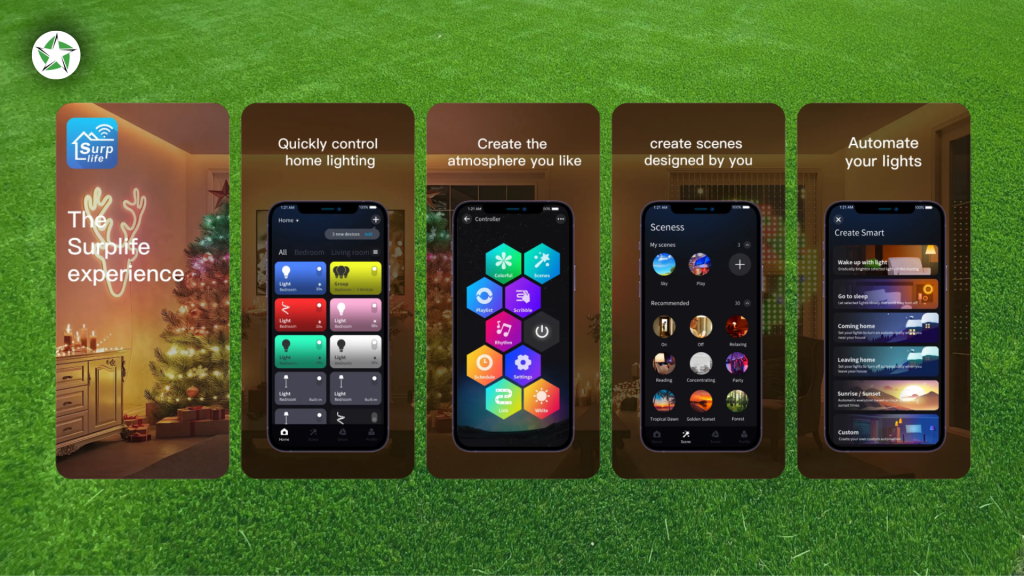
Control runs through the free Surplife app, available on iOS and Android, where a homeowner sets colors, schedules, and scenes from a phone. Installation is typically finished in a single day, start to finish. You can see examples of finished installs in our project gallery.
Frequently Asked Questions About Permanent Outdoor Lighting
Will the lighting hardware be visible during the day?
The aluminum track is color-matched to your soffit or fascia, so from the street it blends in.
How long does a permanent lighting install take?
Most homes are finished in a single day.
What happens if one section goes out?
Each section is replaceable on its own, so one issue does not mean replacing the whole system.
Is this only useful around the holidays?
Not at all. Many homeowners run warm white accent lighting year-round and switch to color for holidays, game days or celebrations.
Will my HOA allow permanent lighting?
Lone Star Turf can help with permanent lighting design approval documentation an HOA requires before install.
Do I need to replace my existing string lights first?
No. Most homes have their existing lights removed as part of the install, and the new track goes up in the same visit.
Is permanent lighting only for new construction?
No. Most installs go on existing homes. The track mounts to the soffit or fascia that is already there.
The Bottom Line
Whatever term brought you here: Jellyfish, soffit lighting, or permanent outdoor lighting, the product category is the same. What differs is who installs it, backs it up, and answers the phone if something needs attention later. That is worth knowing before a quote arrives, not after the ladder is in the truck.
If you are weighing permanent lighting alongside other backyard work, ask about the whole project at once. A team that installs turf, pavers, and lighting can plan a yard as one connected space instead of three separate vendors working around each other’s timelines.
If you are ready to compare what a direct, single-team install looks like for your home, get a free estimate from Lone Star Turf.

You can also check out the artificial turf FAQs page if turf is part of the same project.