
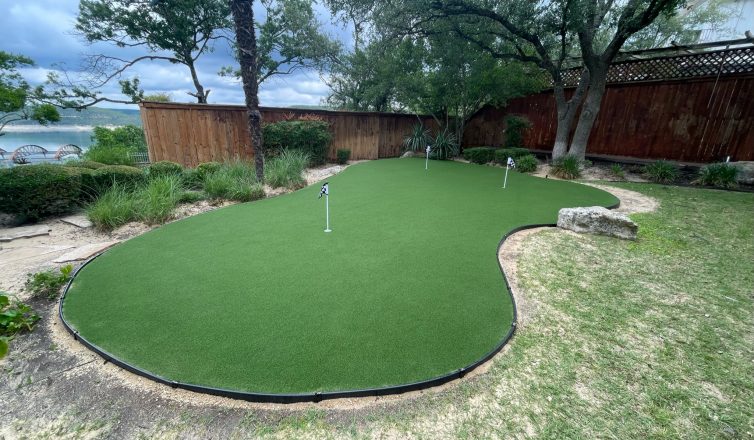
If you’re dreaming of practicing your short game just steps from your back door, you’re not alone. More homeowners and golf enthusiasts are turning their backyards into personal putting paradises. But while artificial turf may seem like an easy one-size-fits-all solution, not all turf is suited for golf. Choosing the wrong type can turn your green into a frustrating, uneven mess that doesn’t hold up to real play.
In this post, we’ll walk you through what truly makes the best artificial turf for putting greens, and why it’s fundamentally different from what you’d use in the rest of your yard. Whether you’re a casual golfer or serious about your stroke, understanding these differences can save you thousands and ensure every putt rolls true.
What You’ll Learn
- Why the best artificial turf for putting green is engineered for golf, not just aesthetics
- Key performance features that deliver consistent speed and true ball roll
- Why landscape turf simply doesn’t cut it for golf applications
- How expert base preparation transforms your green into a pro-level surface
- What to consider when choosing, installing, and maintaining your home putting green
What Makes a Great Putting Green? (And Why Most Turf Falls Short)
A backyard putting green isn’t just about looks, it’s about performance. Even golf hobbyists want a surface that feels comfortable and consistent to play on. That means tight pile, short height, and a firm, level base beneath the turf.
Putting green turf is designed specifically to replicate the way a ball rolls on natural bentgrass or Bermuda greens. It uses dense, low-pile fibers (often nylon or high-grade polypropylene) and a highly compacted base to prevent irregular bounces and ensure predictable ball speed.
In contrast, standard landscape turf is made for appearance and walking comfort. It’s typically taller, fluffier, and designed to look lush from a distance. That’s fine for your front yard, but when you roll a golf ball across it, you’ll see the problem immediately: wobble, drag, and bounce.
Another overlooked factor? The base. A proper putting green requires expert grading, multi-layered compaction, and specialized infill to maintain firmness over time. Skimping on this can lead to problems like surface depressions, and a green that plays more like a shag carpet.
Key Features to Look for in the Best Artificial Turf for Putting Green
When you’re evaluating turf for a golf application, here’s what really matters:
- Pile Height and Density
The best putting green turf typically has a pile height between 0.5 and 1 inch. Shorter fibers reduce interference with the ball and support a smoother roll. High fiber density prevents matting and keeps your green consistent even with heavy foot traffic. - Surface Smoothness
To get a “true roll,” your sub-base must be perfectly graded and compacted. Even the best turf will fail if it’s laid over uneven ground or soft spots. - Contour Capability
A professional putting green installer can shape the sub-base to create custom slopes, divots, and berms. This not only enhances the look but also adds challenge and realism to your green. - Durability in Heat and Sun
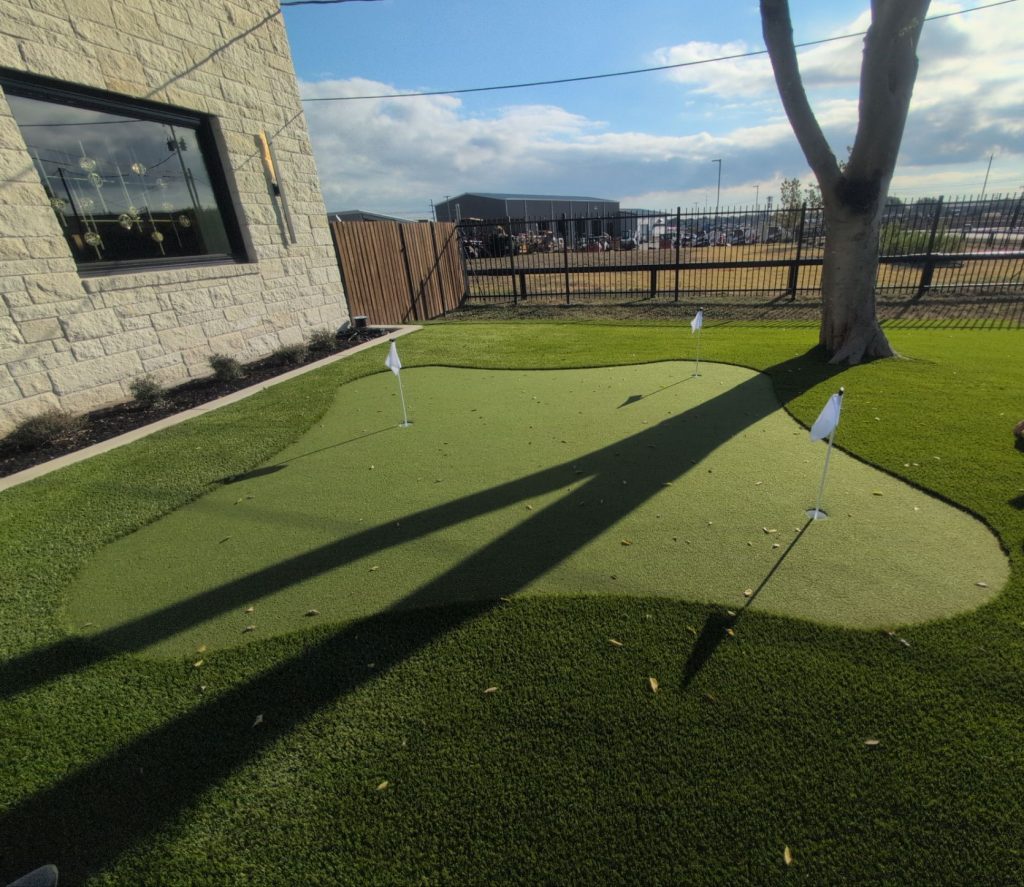
In the Southern U.S., turf must withstand brutal sun and big temperature swings. Nylon is often preferred for this reason—it resists fading, doesn’t expand or contract as much, and can even handle window glare without melting. - Specialized Infill
Unlike landscape turf, putting greens use clean, non-compacting infill to fine-tune ball speed and keep fibers upright. In some premium installations, infill is layered and water-rolled to fully customize ball speed and performance to a golfer’s preference.
Problems with Using Landscape Turf for Golf Greens
Many homeowners are tempted to use landscape turf for putting greens, either to save money or because it “looks similar.” But the reality is, it’s not built for golf.
Inconsistent Roll:
Longer blades and lower density make balls veer off-line or stop short, especially if the turf wasn’t installed on a firm sub-base.
Poor Base Preparation:
Most landscape turf installations skip the precision grading and compaction required for putting surfaces. Over time, this leads to lumpiness, loose seams, and a green that’s no fun to play on.
Faster Wear:
Landscape turf isn’t designed for repeated golf swings or foot traffic around the cup. It mats quickly and can break down after just a season or two of regular use.
False Savings:
The cost of tearing out improperly installed turf and doing it right can easily exceed what you’d pay for a premium putting green upfront.
How to Evaluate and Select the Right Putting Green Turf
Whether you’re building a green for serious practice or casual fun, a few smart steps can help you make the right choice:
Step 1: Define Your Purpose
Do you want to improve your short game, entertain guests, or just upgrade your backyard’s appeal? Your goals will shape your design and materials.
Step 2: Test Turf Samples
Request samples of real putting green turf. Test the roll with a golf ball. Ask to see demo installations or visit past projects if possible.
Step 3: Ask About Durability and Warranty
In Texas and across the South, UV resistance is a must. Confirm the turf’s heat tolerance, infill type, and manufacturer warranty.
Step 4: Prioritize Professional Installation
Even the best turf will fail without expert prep. Look for installers with experience in contouring, compaction, seam integration, and infill calibration.
Avoid Common Mistakes:
Don’t choose turf based on looks alone. Don’t rush into an install without proper base prep and grading. And never assume all installers are equal. Be sure to check reviews, photos, and references before you sign.
Installation & Maintenance: Getting the Most from Your Green
Proper installation is what turns turf into a playable putting surface. At Lone Star Turf, this process includes:
- Precise site grading to eliminate imperfections
- Multi-layer base compaction for firm footing
- Seamless turf integration and edge detailing
- Custom shaping for breaks and slope variation
- Careful infill layering to control speed and spin
Once installed, maintenance is simple. Blow off debris weekly. Occasionally brush the surface to prevent matting. Keep infill levels topped off. And if needed, call for an annual tune-up to keep the green dialed in.
FAQ: Your Top Putting Green Turf Questions Answered
Q: What’s the difference between putting green turf and landscape turf?
A: Putting green turf is shorter, denser, and built for ball roll. Landscape turf is designed for aesthetics and walking comfort.
Q: Can I install putting green turf myself?
A: It’s possible, but not advised. Precision grading, base prep, and infill layering are key to performance and longevity.
Q: How long does a backyard putting green last?
A: With proper materials and care, 10 to 15 years is common. Premium nylon options may last even longer.
Q: How do I maintain my putting green?
A: Regularly blow off debris, brush the surface, and inspect infill levels. Avoid using landscape tools or rakes that may damage the fibers.
Q: Is it worth paying for professional installation?
A: Absolutely. Expert install ensures long-term playability, fewer issues, and better visual results.
Q: Can I use landscape turf if I just want a casual green?
A: It may seem fine at first, but expect inconsistent performance and faster wear. If golf is the goal, putting turf is worth the investment.
Conclusion: Your Green, Done Right
A great backyard putting green doesn’t just look good—it plays right, every time. Whether you’re practicing for your next round or hosting a backyard tournament, the best artificial turf for putting greens is engineered with precision, not just appearance. Don’t settle for close enough. Get the turf, install, and support that will keep your green rolling smooth for years to come.
Want expert help building the perfect home green? Contact Lone Star Turf for a personalized design consultation and learn why we’re trusted by serious golfers across Texas.