
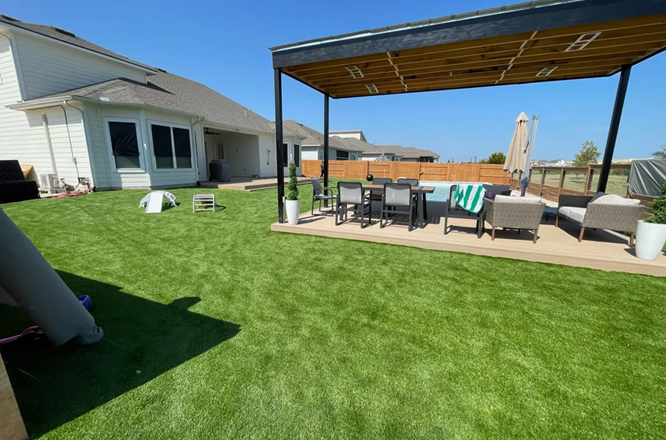
If you’ve lived in Texas for more than five minutes, you know the deal: keeping a natural lawn alive is a full-time job that you’re probably losing. Between the scorching heat and those “Stage 2” water restrictions that always seem to hit right when your grass starts to brown, homeowners spend thousands just to maintain a yard that looks “okay” maybe half the year.
That’s why xeriscaping has moved from a niche trend to a Texas necessity.
At Lone Star Turf, we see xeriscaping with artificial turf as a smarter way to landscape: designing your yard to use less water and require less maintenance. And one of the best ways we’ve found to do that is by integrating artificial turf into the design.
Now, I’m not going to sit here and tell you turf is the answer for every yard, because it’s not. But when it makes sense, it solves a lot of the problems homeowners deal with every single day.
What Are the Other Options to Xeriscaping with Artificial Turf?
Artificial turf is a great solution, but it’s not the only one.
Xeriscaping is really about building a yard that works with your environment, not against it. Turf is just one piece of that puzzle.
Here are the other options Texas homeowners are considering:
Native & Drought-Tolerant Plants
This is probably the most traditional xeriscaping approach. You use plants that are already adapted to Texas: agave, yucca, ornamental grasses, and native shrubs.
They require a lot less water than traditional landscaping, but they’re not zero-maintenance. You’re still dealing with trimming, seasonal changes, and sometimes irrigation — just at a lower level.
Rock & Gravel Landscaping
You’ve probably seen this: decomposed granite, river rock, gravel beds. It’s clean, simple, and doesn’t require water.
The downside? It can feel a little harsh or unfinished if it’s overdone. And it doesn’t give you usable space. You’re not exactly sending your kids or dogs out to play on a gravel yard.
Mulch-Based Designs
Mulch is another option people use to retain moisture and reduce watering needs. It works well in garden beds and around plants.
But over time, mulch breaks down and needs to be replaced. It can also shift, fade, and wash out in heavy rain.
Hybrid Designs (What We Recommend Most Often)
This is where things start to make the most sense.
Instead of going all-in on one solution, you combine elements: artificial turf for usable space, native plants for aesthetics, and rock or mulch for structure.
That’s what we do on a lot of projects. Turf where you actually live, such as where your kids play, where your dogs run, and where you hang out, and then lower-maintenance materials everywhere else.
At the end of the day, the goal isn’t just to “save water.” It’s to build a yard you’ll actually use.
And that’s the biggest mistake we see: people design for looks or cost, but not for how they live day-to-day.
If turf makes sense, we’ll tell you. If it doesn’t, we’ll tell you that, too.
The “Grass Tax”: Why People are Quitting Natural Lawns
Most people don’t realize how much water their yard actually uses until restrictions hit. In a lot of areas, irrigation is one of the biggest contributors to overall water usage, and it’s also one of the easiest places to cut back. In most Texas cities, summer outdoor watering accounts for 50-70% of the total household water usage.
When you switch to artificial turf, you’re essentially “deleting” that line item from your budget. No more irrigation repairs, no more guessing if the sprinklers hit that one dry patch, and no more fines from the city.
Let’s Talk About Cost (Because Everyone Asks)
One of the biggest objections we hear is: “Artificial turf is expensive.”
And up front? Yes, it is. I’m not going to sit here and tell you it’s a budget buy. It’s an investment. But you have to look at the “hidden” costs you’re already paying for a mediocre natural lawn:
- Monthly Water Bills: The Texas summer “spike.”
- Maintenance: Mowing, edging, and leaf blowing.
- Chemicals: Fertilizers, pesticides, and weed control (which aren’t cheap or great for the dog).
- Repairs: Re-sodding the same dead patch every two years.
For most of our clients, the break-even point is roughly 4 years. If you plan on staying in your home longer than that, turf starts paying you back.
The Environmental Side Most People Overlook (It’s Not Just About Water)
Water savings is the big one, but it’s not the only benefit.
With artificial turf, you’re also cutting out fertilizers, pesticides, and all the runoff that comes with them. That’s better for your yard, your pets, and your local environment.
Is turf perfect? No. But compared to the chemical load required for a St. Augustine lawn in a drought? It’s a much cleaner system for your kids and pets to play on.
What Installation Actually Looks Like
A lot of companies will gloss over this part, but installation is where everything either goes right or (really) wrong.
It starts with proper site prep: removing existing grass, grading, and making sure future water movement is dialed in. If that’s not done right, nothing else matters.
From there, we install the turf, secure it, and add infill to give it structure and durability. The goal is for it to look natural, move water properly, and hold up over time.
That’s where experience really matters. Anyone can roll out turf. Not everyone installs it correctly.
Artificial Turf Maintenance (Because It’s Not “Zero”)
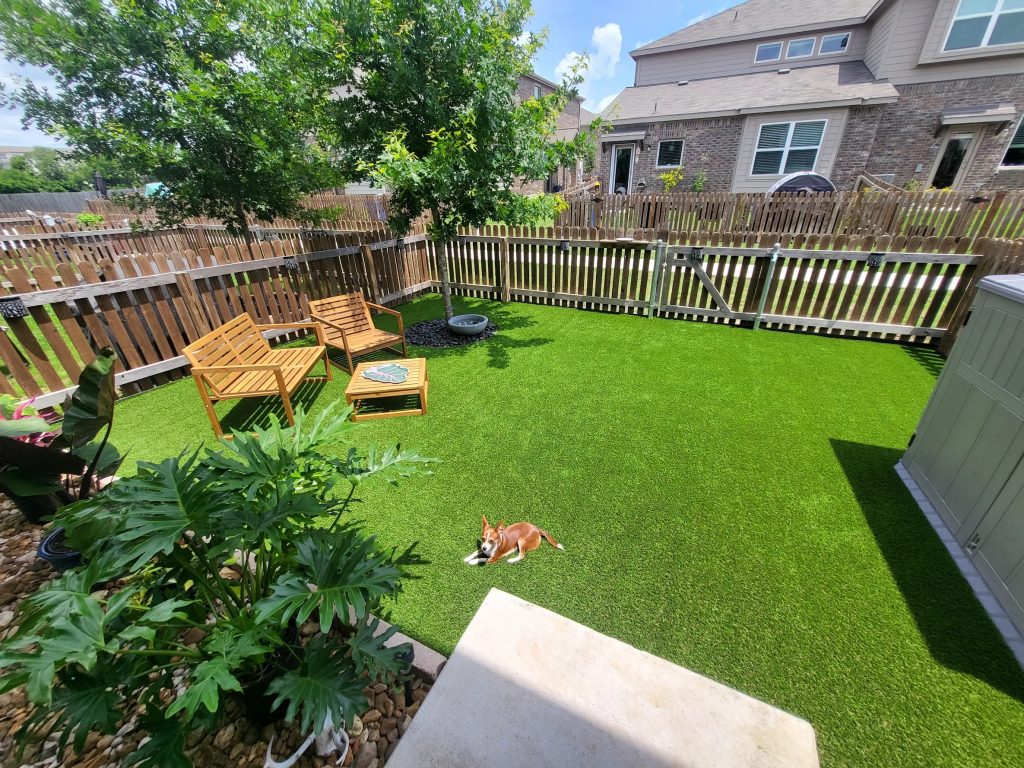
Another thing we’re very upfront about: artificial turf is low-maintenance, not no-maintenance.
You’ll still need to:
- Rinse it occasionally
- Blow off leaves or debris
- Brush it every now and then
That’s it. No more mowing, no more watering, no more fertilizers. Just basic upkeep to keep it looking good long-term.
Why Artificial Turf Works So Well in Texas
Texas isn’t exactly forgiving when it comes to landscaping. Between drought conditions, extreme heat, and unpredictable weather, natural grass struggles.
Artificial turf does not.
It holds up in the heat, stays green year-round, and doesn’t rely on water to survive. That’s why it’s become such a strong option for homeowners who are tired of fighting their yards each year.
What Lone Star Turf Has Seen Firsthand
Lone Star Turf has worked with a lot of homeowners across Texas who made the switch, and the feedback is pretty consistent:
- Lower water bills
- Less time spent on maintenance
- A yard they can actually use year-round
- And honestly, a lot less frustration
At the end of the day, most people just want a backyard that works. Not something they’re constantly trying to fix.
If you’re even considering artificial turf, the best thing you can do is get educated before making a decision.
We put together a free resource that walks through everything — costs, materials, pros and cons, and what to expect from start to finish. Check out the Ultimate Guide to Artificial Turf.
It’ll give you a much clearer picture of whether artificial turf is the right fit for your space — and if it is, how to do it the right way. When you’re ready, contact us to get a free estimate.
Frequently Asked Questions About Xeriscaping
What is the lifespan of artificial grass in xeriscaping?
The lifespan of artificial grass typically ranges from 15 to 25 years, depending on the quality of the material and the level of maintenance it receives. High-quality synthetic turf is designed to withstand various weather conditions, including extreme heat and heavy foot traffic. Regular maintenance, such as cleaning and brushing, can help extend its lifespan. Homeowners should also consider factors like UV resistance and warranty options when selecting artificial grass to ensure they choose a durable product suitable for xeriscaping.
Can artificial grass be recycled at the end of its life?
While not all artificial grass is fully recyclable, many manufacturers are increasingly offering recyclable options. The recycling process typically involves breaking down the turf into its component materials, which can then be repurposed for new products. Homeowners should check with their turf supplier about recycling programs and options available in their area. As recycling technologies continue to advance, the sustainability of artificial grass is expected to improve, making it a more eco-friendly choice for xeriscaping.
How does artificial grass affect local wildlife?
Artificial grass can have mixed effects on local wildlife. On one hand, it eliminates the need for chemical fertilizers and pesticides, which can be harmful to animals and insects. On the other hand, synthetic turf does not provide the same habitat as natural grass, potentially reducing food sources for certain wildlife. Homeowners can mitigate this impact by incorporating native plants and creating diverse landscapes around the artificial turf, which can support local ecosystems while still benefiting from the water-saving advantages of xeriscaping.
What are the best practices for integrating artificial grass with other xeriscaping elements?
Integrating artificial grass with other xeriscaping elements involves careful planning and design. Homeowners should consider using native plants, rocks, and mulch to create a visually appealing and functional landscape. Hydro zoning, or grouping plants with similar water needs, can enhance water efficiency. Additionally, incorporating pathways and seating areas made from permeable materials can improve water movement and accessibility. By combining artificial grass with diverse xeriscaping features, homeowners can create a sustainable and attractive outdoor space that conserves water effectively.
Are there any health concerns associated with artificial turf?
Health concerns related to artificial turf primarily revolve around the materials used in its production, such as infill materials that may contain chemicals. However, many manufacturers now offer safer, non-toxic options. It’s essential for homeowners to research the specific products they are considering and choose those that meet safety standards. Regular maintenance, including cleaning and inspecting for wear, can also help mitigate potential health risks. Overall, when properly selected and maintained, artificial grass can be a safe and beneficial choice for xeriscaping.