
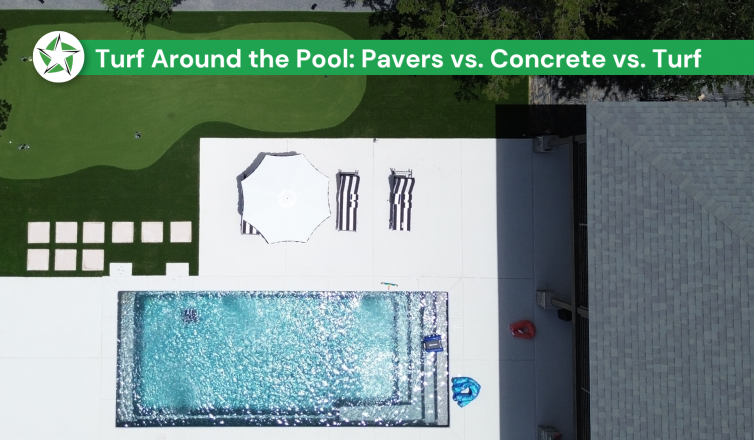
A pool in Texas means summer is officially on. Cannonballs, pool noodles, more hours outside than in. The deck around it plays a bigger part in that fun than most homeowners expect, since it’s where bare feet land every single time someone hops in or climbs out.
Homeowners planning a new pool or redoing an old deck usually land on the same three choices: concrete, pavers, or turf around the pool. All three can work great, and the right one just depends on how your family actually uses the space. Here’s an honest look at how they stack up once the pool’s full and the kids are already jumping in.
Concrete: The Budget-Friendly Default
Concrete is the classic pick for good reason. It’s the fastest to pour, the easiest fit for a budget, and it gets a deck open sooner than the other two options.
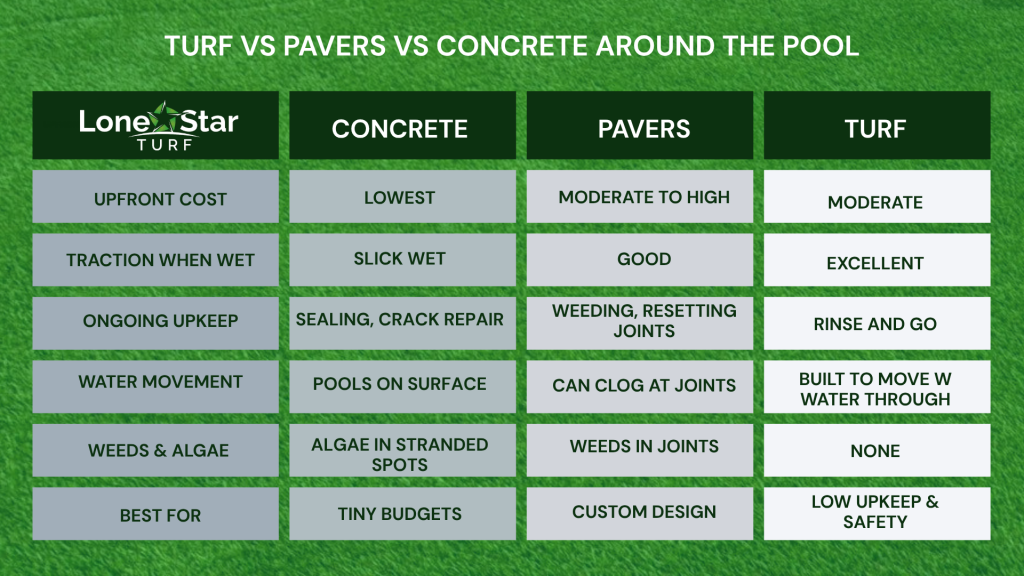
Worth knowing going in: traditional dark concrete can climb past 140 to 150 degrees Fahrenheit in direct Texas sun, so summer afternoons might mean a quicker walk across the deck. The clay-heavy soil across Central Texas can shift over time too, which is why concrete sometimes develops a hairline crack down the road. And a wet surface gets slicker than pavers or turf, especially in shaded corners.
None of that rules concrete out. A reseal every few years keeps the grip and color fresh, and plenty of homeowners are glad to trade a little upkeep for the lower price tag. Concrete is a great call for a utility strip behind the equipment pad, or for anyone who wants the main deck done for as little as possible.
Pavers: The Design Upgrade
Pavers bring a level of style concrete can’t match. The textured surface gives great footing when wet, and the range of colors and patterns turns a deck into a feature instead of an afterthought. See our pavers page for the styles we install most around Central Texas pools.
They run a little more than concrete upfront, and the payoff depends on the install. A well-compacted base with proper joint sand and edge restraints keeps pavers locked in place for years without shifting or settling. It’s a step that takes an experienced crew, and it’s worth asking about before signing a contract, not after the invoice shows up. Get that part right, and pavers hold their look with very little maintenance.
Pavers are a strong pick for homeowners who want a specific look, whether that’s a natural stone pattern around a freeform pool or a clean, modern grid around a rectangular one. They’re also a great choice for a walkway or entry path where you want a defined, finished edge.
Turf: The Low-Maintenance Favorite
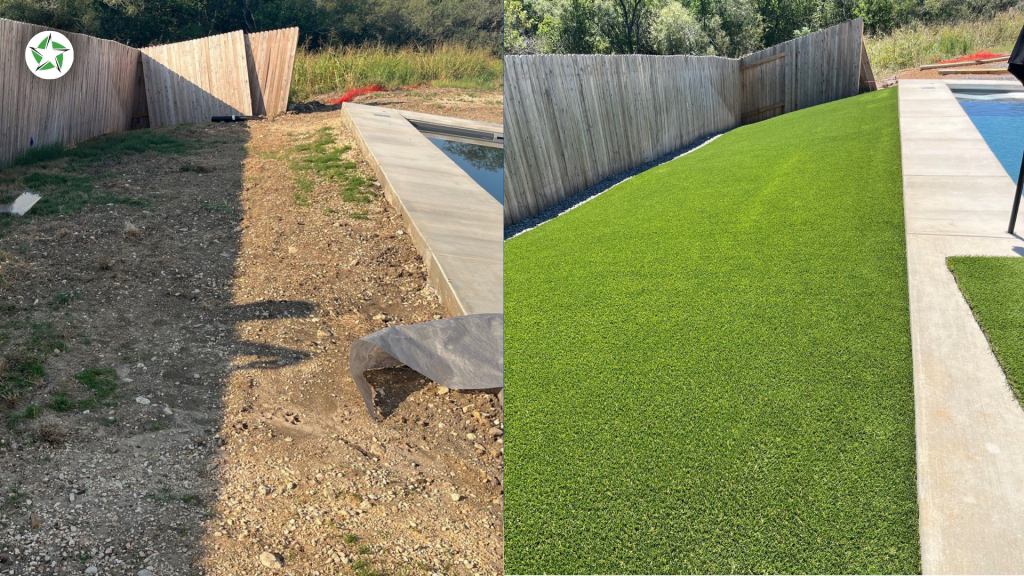
It’s easy to see why turf has become the low-maintenance favorite once you picture a full pool day. It’s soft underfoot for bare feet and cannonballs, built with a slip-resistant surface for wet decks, and engineered to move water through the base instead of letting splash-out sit on top.
Chlorinated and saltwater pools don’t break turf down the way they can wear on some deck coatings over time. There’s also nothing to mow, edge, or fertilize three feet from the water, which is one less job on a Saturday when the whole point is relaxing next to the pool. Our pet turf page covers how that holds up for four-legged pool crashers specifically.
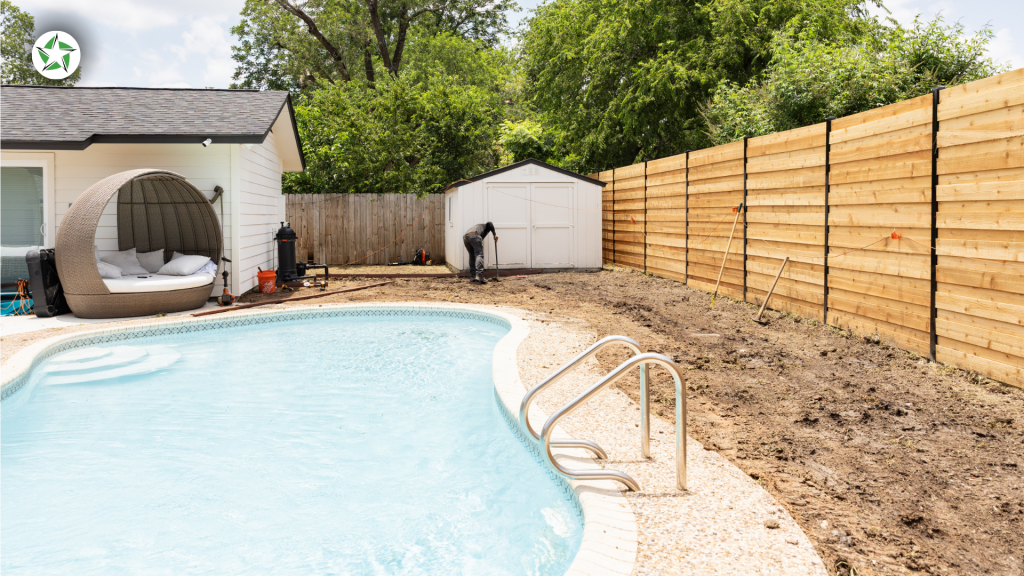
The one requirement: turf around a pool needs a properly prepped base with a real path for water to move underneath it. That’s why we walk every site before quoting a pool turf project instead of pricing off a photo. Our pool turf page covers what that installation involves.
Combining Materials
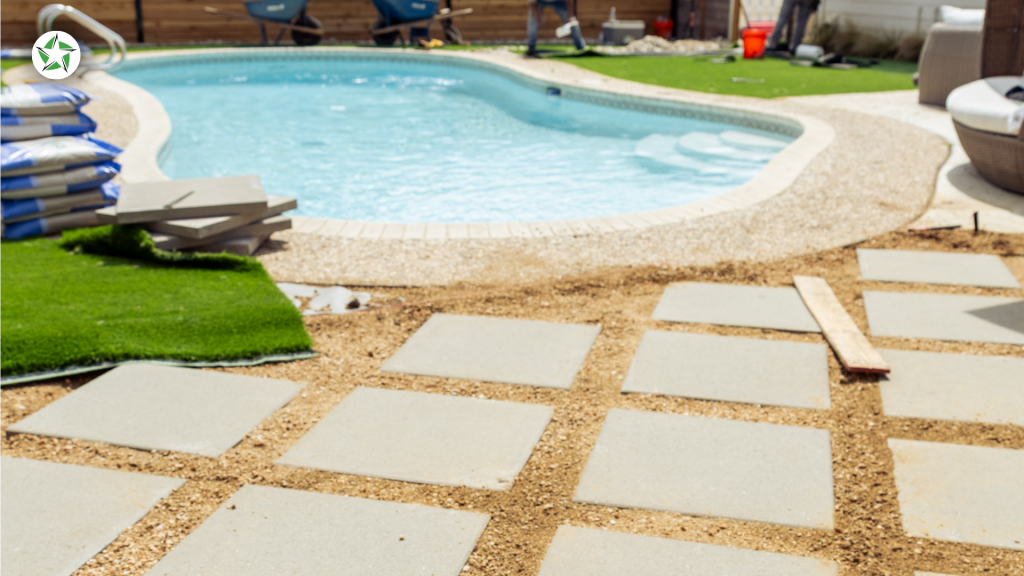
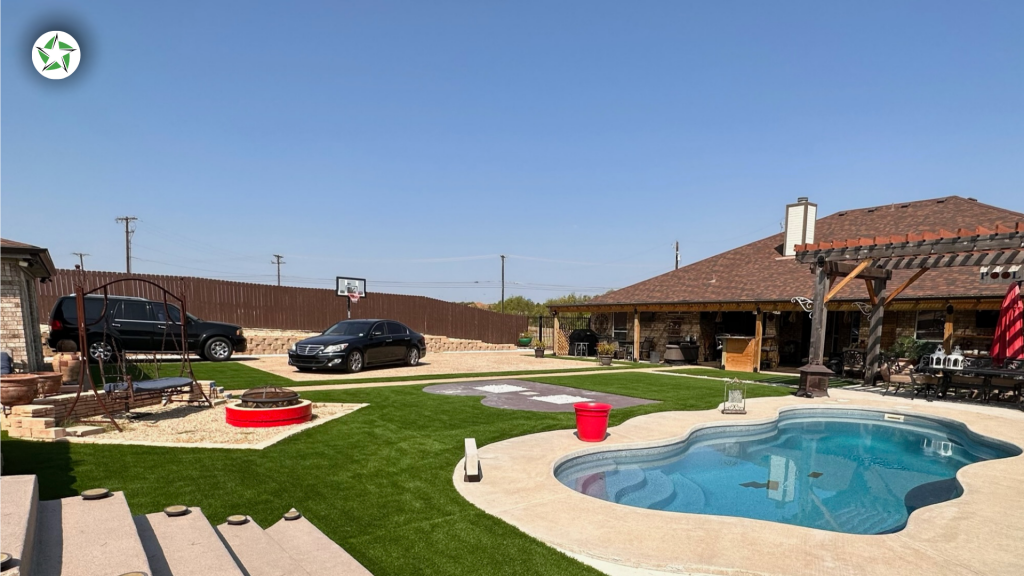
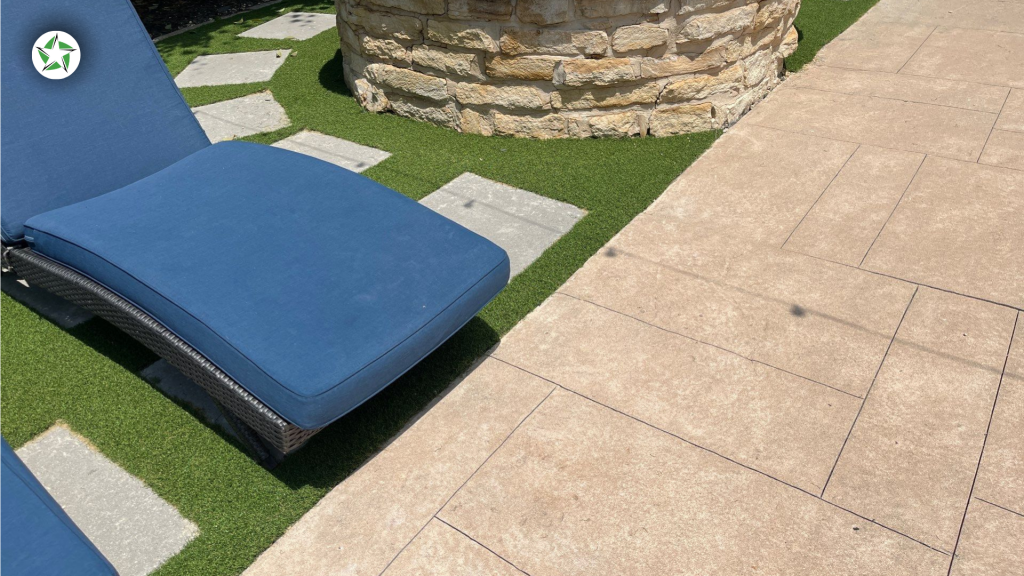
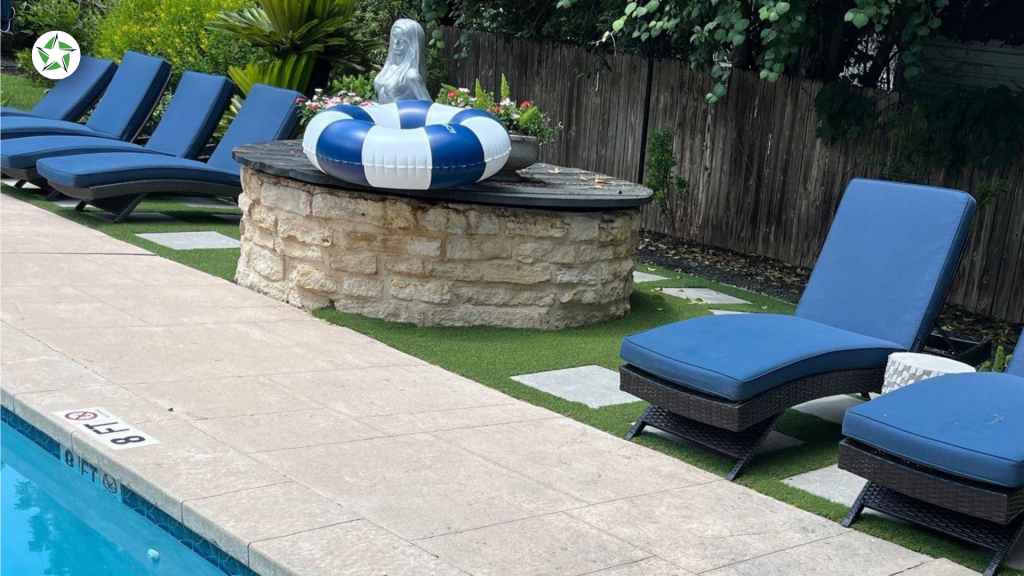
Most of the pool decks we install aren’t one material end to end. They’re turf fitted around existing pavers, a paver walkway framing a turf lounge area, or a stone edge at the coping with turf filling in everything past it.
That combination is often the best of both worlds. You get the traction and texture of hardscape exactly where you walk barefoot from the house to the water, and the softness and low upkeep of turf everywhere else. Pairing turf and pavers also opens the door to permanent outdoor lighting along the transition, which stretches how late into the evening the space gets used. Check our gallery for real combination projects around Central Texas pools.
Which Material Is Right for You
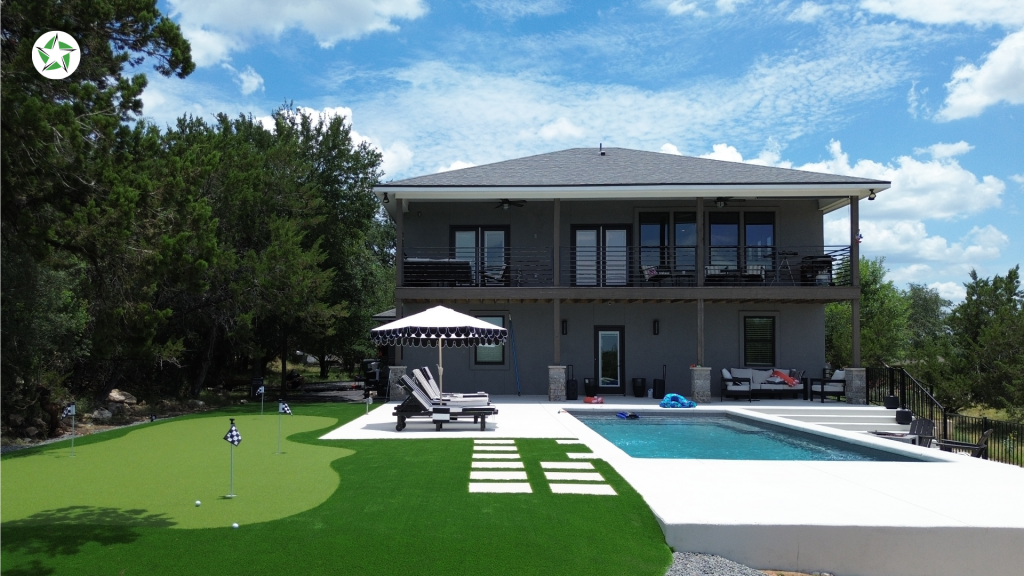
Want the lowest cost to get the pool open? Concrete gets you there, with a reseal every few years to keep it looking sharp.
Have a specific look in mind? Pavers deliver on design and hold up beautifully when the base is set right the first time.
Want the easiest pool days possible for kids and pets? Turf is built for exactly that, with the least upkeep of the three.
A lot of homeowners land somewhere in between, which is why a combination install is always worth asking about before locking in one material for the whole deck.
Think about what the deck is doing for you on a regular Tuesday in July, not just at the pool party you’re planning for June. Bare feet, kids, dogs, and zero interest in ever sealing anything again? Turf usually wins that conversation. A specific design vision you’ve had pinned to a board for two years? Pavers are worth the extra cost. Keeping the project within a set number, and happy to reseal down the road? Concrete gets the job done.
Frequently Asked Questions: Turf, Pavers, and Concrete Around Your Pool
Which material costs the least to install around a pool?
Concrete is usually the lowest upfront cost. Pavers and turf both run higher at the start, but each can lower long-term maintenance spending depending on how the deck gets used day to day. Our turf pricing page has a current breakdown by project size.
Is turf safe right next to a pool?
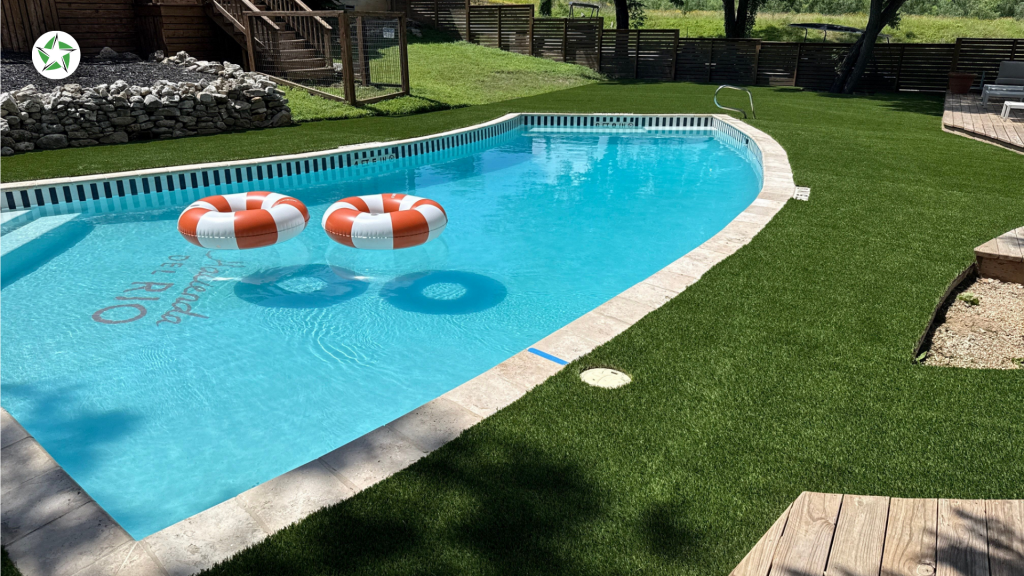
Yes, when it’s installed with the right base and a real path for water to move through it. Turf is slip-resistant when wet and won’t grow algae the way a shaded, damp concrete corner will.
Does water move properly through turf near a pool?
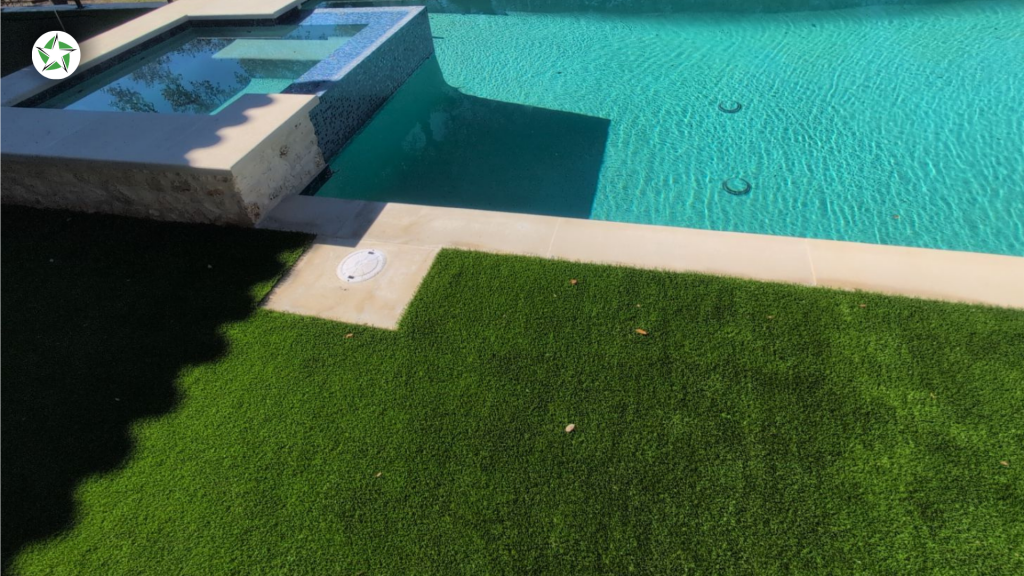
Properly installed pool turf uses a perforated backing over a prepped base, so splash-out and rain move through the system instead of sitting on top of it.
Can turf be combined with pavers or existing concrete around my pool?
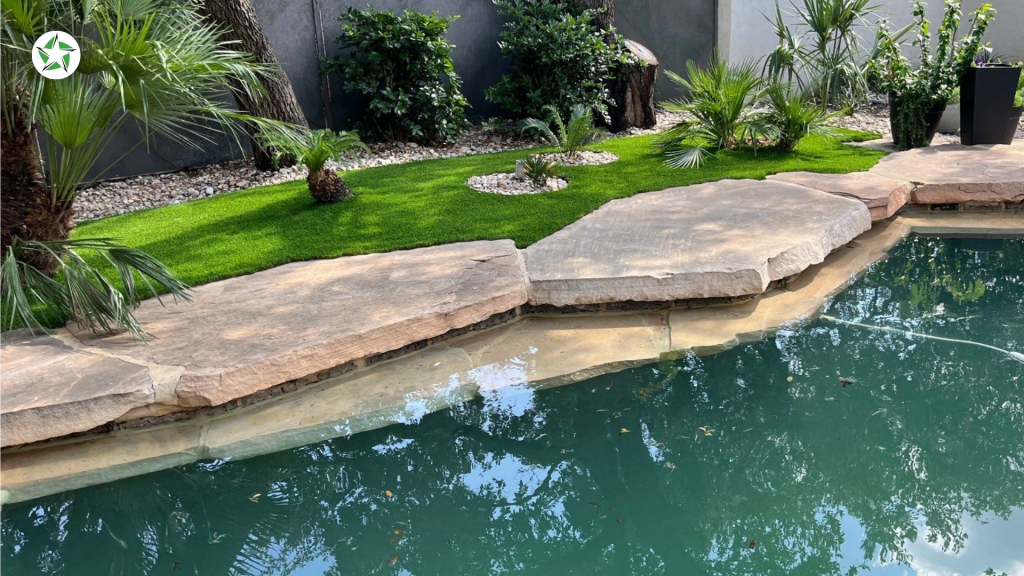
Yes. Turf can be cut and fitted around pavers, coping, or existing concrete without tearing out everything already there. It’s one of the most requested combinations we install.
How long does a pool deck material switch take to install?
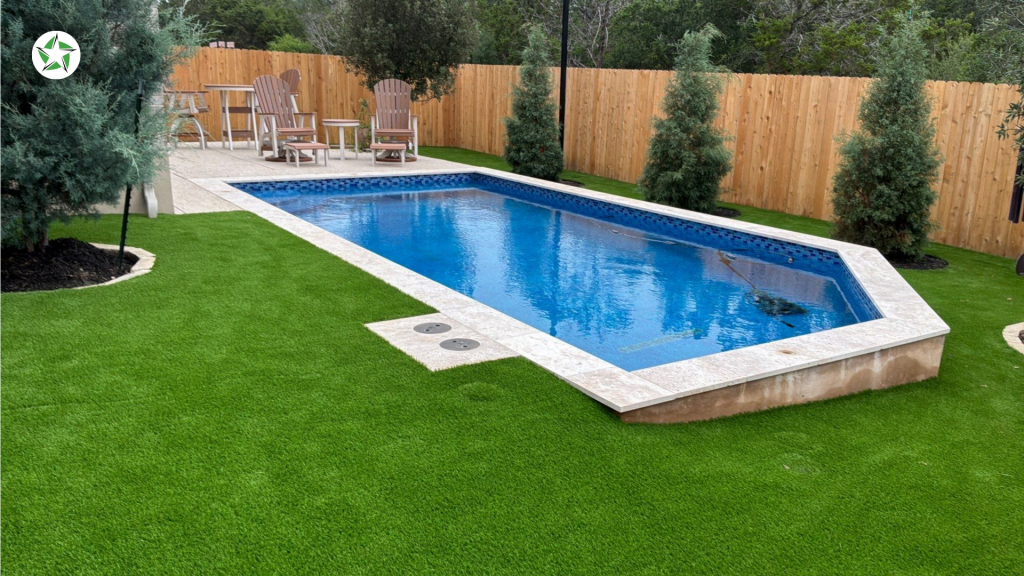
Most pool-area turf or paver projects take a few days depending on square footage and whether the old material needs to come out first. We’ll give you a specific timeline during your on-site estimate.
Get Your Free Estimate
There’s no universal answer here. A shaded pool with kids underfoot has different priorities than an entertaining space built around a bar cart and string lights. Get a free estimate and we’ll give you an honest read on what fits your specific pool deck, even if that means mixing materials instead of picking just one.