

Why Texas Backyards Fight You Every Season
Outdoor irrigation accounts for more than 50 percent of single-family water use in Texas, according to research from the Texas Water Development Board. In hotter, drier cities across the state, that share climbs even higher. Most of that water goes toward keeping grass alive. And in a significant number of Texas backyards, the grass dies anyway.
This is a Texas soil, shade, and climate reality that most lawn care advice does not account for.
Texas growing conditions are hard on traditional turfgrass. Heavy clay soil, intense summer heat, water restrictions, shade from mature trees, and the relentless wear from dogs and kids all work against a traditional lawn. Many Texas homeowners spend years reseeding, resodding, and re-watering the same spots without ever fixing the underlying problem.
If you’re wondering “Why Won’t Grass Grow in My Texas Backyard?”, this post breaks down the six most common reasons grass fails in Texas backyards and walks through what your options actually are, depending on what is causing the problem in your yard.
6 Reasons Grass Won’t Grow in Your Texas Backyard
1. Texas Clay Soil Suffocates Grass Roots
Most Texas yards sit on heavy clay soil. Clay particles are tiny and pack tightly together, leaving almost no room for air, water, or nutrients to reach the roots.
The result is a cycle that repeats every season:
- After rain, the yard turns into a mud pit. Water sits on top instead of soaking in.
- During dry spells, that same clay bakes into something close to concrete.
- Grass roots cannot grow deep in either condition. The lawn stays thin, patchy, and weak.
Soil compaction is a persistent problem in central Texas, where the fine clay particles stick together in ways that make long-term grass growth almost impossible without major soil amendment work. Aerating and amending clay soil is a real fix, but it is expensive, time-intensive, and temporary. Texas clay does not stay amended. It compacts again.
2. Shade From Trees or Structures Starves the Lawn
Turfgrass needs sunlight to survive. Most grass varieties require at least five to six hours of direct sun per day.
Texas A&M AgriLife’s Water University identifies shade as one of the most frequently asked landscape problems in the state. If your backyard has mature oak trees, large structures, a privacy fence, or a covered patio, there are likely spots that simply do not get enough light for grass to thrive.
Shade-tolerant varieties like St. Augustine can help, but even those need consistent sun. Under dense canopies, even St. Augustine thins out and dies over time.
3. High Foot Traffic Compacts Soil and Kills Grass
Dogs. Kids. A path everyone cuts across every day. High-traffic areas get compacted fast.
Once soil is compacted, water cannot soak in, roots cannot breathe, and grass thins to nothing. You can resod the same spot every spring. It will die again in the same spot every summer.
This is one of the clearest signals that grass is not the right solution, not because of anything you are doing wrong, but because the use pattern of your yard is not compatible with what natural grass needs.
4. Texas Summer Heat and Water Restrictions Create an Impossible Equation
Keeping a traditional Texas lawn alive in summer requires a lot of water. Research from the Texas Living Waters Project shows that homeowners tend to overwater landscapes by two to three times the amount the landscape actually needs, yet the grass still dies when summer heat peaks.
As soon as Stage 2 water restrictions hit, which happens most summers in Central and South Texas, you cannot water often enough to keep grass healthy. The lawn browns out. You spend the fall trying to recover it. Then you do it all again next year.
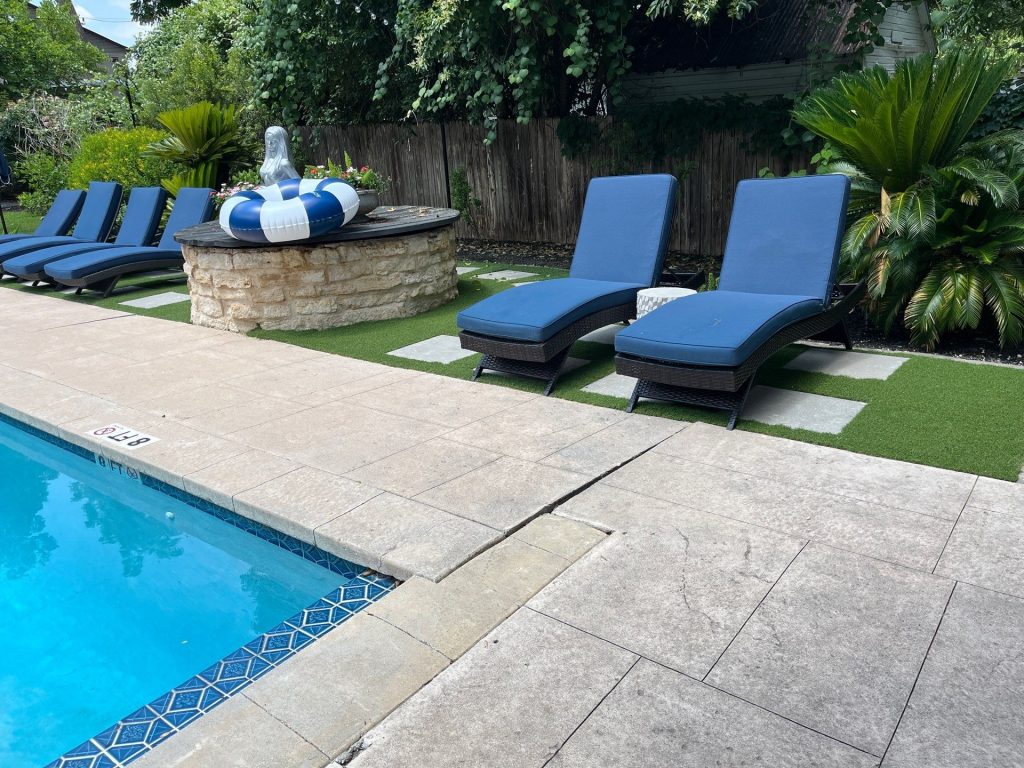
5. Poolside and Low-Lying Areas Stay Too Wet or Too Dry
Grass around pools faces a specific challenge: constant moisture followed by hard drought conditions. Splash zones and pool surrounds alternate between waterlogged and parched. Grass in these areas tends to stay thin, brown, and muddy.
The same issue shows up in low-lying areas of the yard where water collects after rain. Standing water drowns grass roots. By the time it drains, the soil is compacted from saturation. The cycle continues.
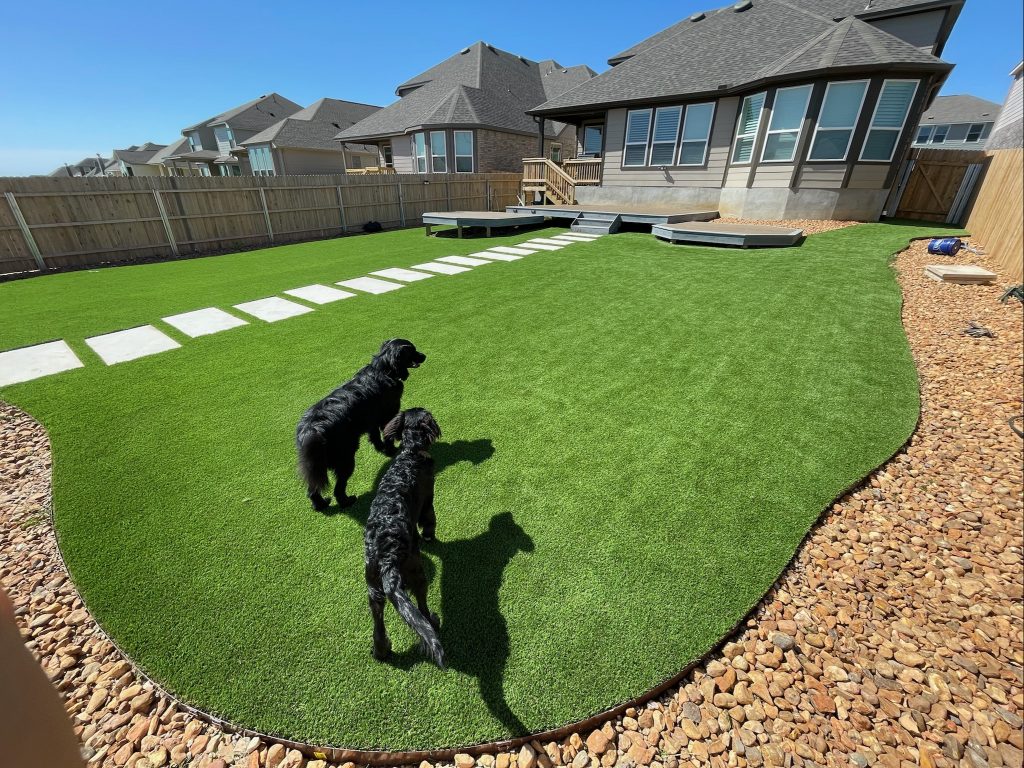
6. Pets and Grass Do Not Coexist for Long
Dogs do three things to grass: they dig, they run the same paths repeatedly, and their urine creates nitrogen burn, those brown circular spots that show up and spread no matter how much you water.
A single large dog can turn a backyard lawn into a mud pit within one rainy season. Two dogs do it faster. Most pet owners know the cycle: resod, wait, watch the dogs go right back to the same spots, resod again.
The Real Cost of Fighting Your Yard Every Year
Most homeowners underestimate what they spend to keep a struggling natural lawn alive.
A typical Texas homeowner spends somewhere between $1,200 and $3,000 per year on lawn maintenance. That includes mowing, fertilizer, pest control, weed treatments, irrigation repairs, and periodic resodding. Add in the summer water bill spike, often an extra $50 to $200 per month during peak season, and the annual cost adds up quickly.
That is not a one-time expense. That is what you pay every single year for a yard that still looks rough by August.
What Your Options Actually Are When Grass Won’t Grow in Your Texas Backyard
The right answer depends on your specific situation.
Soil Amendment and Aeration
If the main issue is compacted clay, core aeration combined with compost topdressing can improve soil structure. It is not a permanent fix, but it buys time and improves conditions for several seasons. This works best for large open areas with good sun and low foot traffic. It does not solve shade problems, pet damage, or poolside moisture issues.
Native Plants and Drought-Tolerant Ground Covers
Native Texas plants such as agave, yucca, lantana, and Texas sage do not fight the climate. Pairing them with mulch or decomposed granite gives you a low-water, low-maintenance landscape that looks intentional. The trade-off: no usable green space. You are not sending your kids or dogs out to run around in it.
Artificial Turf: Where It Makes Sense in Texas Yards
For homeowners whose yards need to actually be used, by kids, dogs, and families, artificial turf installation solves what natural grass cannot.
It stays green year-round without water restrictions limiting what you can do. It handles high foot traffic, pets, shade, and pool surrounds. Unlike natural grass, a professionally installed artificial lawn does not require seasonal fixes.
It is worth being honest about what turf is and is not. It is a commitment. It is not cheap up front. But for the specific situations where grass keeps failing, heavy shade, pets, pool areas, high traffic, it is often the most practical long-term answer.
See how artificial turf works for Texas pet owners and why pool surrounds are one of the most common use cases.
How to Know Which Solution Is Right for Your Texas Backyard
The right answer depends on four things:
- How you use the yard. If you need usable green space, play areas, dog runs, outdoor entertaining, you need a surface that can take it. Native plants and gravel look good but do not function like a lawn.
- What is causing the problem. Shade, soil, pets, water restrictions, and poolside conditions each call for different solutions. Know your primary cause before choosing a fix.
- Your long-term plan. If you are in the house for five or more years, the math on artificial turf looks very different than if you are planning to sell in two.
- What your yard actually costs you today. Add up what you spend annually on maintenance, sod replacement, water, and repairs. That is your real baseline for comparison.
If you are not sure where to start, the Lone Star Turf Ultimate Guide to Artificial Turf walks through the full picture: costs, installation, maintenance, and what to expect, so you can make an informed decision.
Frequently Asked Questions: Why Won’t Grass Grow in My Texas Backyard?
What type of grass grows best in Texas shade?
St. Augustine is the most shade-tolerant grass variety for Texas. It needs a minimum of four to five hours of sun per day. Under heavy canopy or near structures blocking direct light for most of the day, even St. Augustine will thin out and die over time. If you have dense shade, grass is unlikely to be a viable long-term solution regardless of variety.
Can you fix compacted Texas clay soil without replacing it?
Yes, temporarily. Core aeration removes plugs of compacted soil and allows water and nutrients to penetrate. Topdressing with compost after aeration helps break down the clay structure over time. The improvement can last several seasons. Texas clay recompacts with foot traffic and weather cycles, so the treatment needs to be repeated regularly.
Is artificial turf worth it for a Texas backyard?
For backyards where natural grass consistently fails, shade, pets, pool surrounds, high-traffic areas, artificial turf typically pays for itself within four to seven years when you account for what you stop spending on water, maintenance, and repairs. The right question is whether the specific conditions in your yard make grass an ongoing losing battle. If yes, turf is worth a serious look. If your yard has good sun, manageable soil, and light use, natural grass may still be the better fit.
How much does artificial turf cost in Texas?
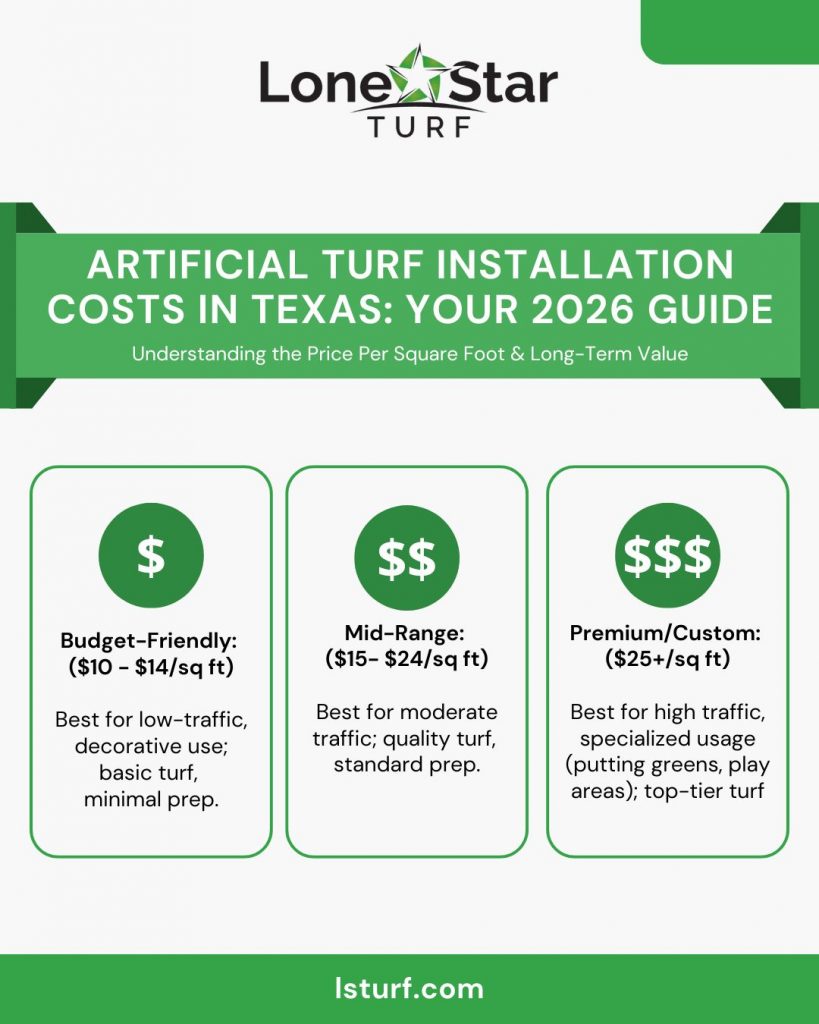
Most professionally installed artificial turf in Texas runs $15 to $25 or more per square foot, all-in. That includes materials, site prep, drainage, infill, and labor. For a 500 sq. ft. yard, expect $7,500 to $12,500 and up. Larger areas typically come in at a lower per-square-foot cost. See Lone Star Turf’s full pricing breakdown for current numbers and what drives cost up or down.
Ready to Stop Fighting Your Yard?
If your backyard has been a losing battle for years, you already know how frustrating it is. Resodding the same spots. Watching the dogs dig it up. Watching the bills go up in the summer.
Lone Star Turf works with Texas homeowners who are done with that cycle. We will tell you straight whether artificial turf makes sense for your yard, and if it does not, we will tell you that too.
Get a free estimate and see what your backyard could actually look like.
Want to learn more about artificial turf before your installation? Check out our Ultimate Guide to Artificial Turf.