
Most of what happens in your first year with artificial turf happens on a Saturday morning, when nothing happens at all. Nothing to mow, nothing to water. That’s the biggest benefit of installing artificial turf in your yard.
The rest plays out over the next twelve months and beyond, and it helps to know what to expect before getting into it. After your first install settles over the first few weeks, you’ll soon find that the upkeep is simple – and to be fair – way easier than real grass. The upkeep amounts to ten minutes with a broom every few weeks, and that does not start until around month five.
Here’s year one with artificial turf as it tends to go. If you want the cleaning routine itself in detail, that lives in our guide on how to clean and maintain artificial turf.
The First Weeks: Go Ahead and Use It
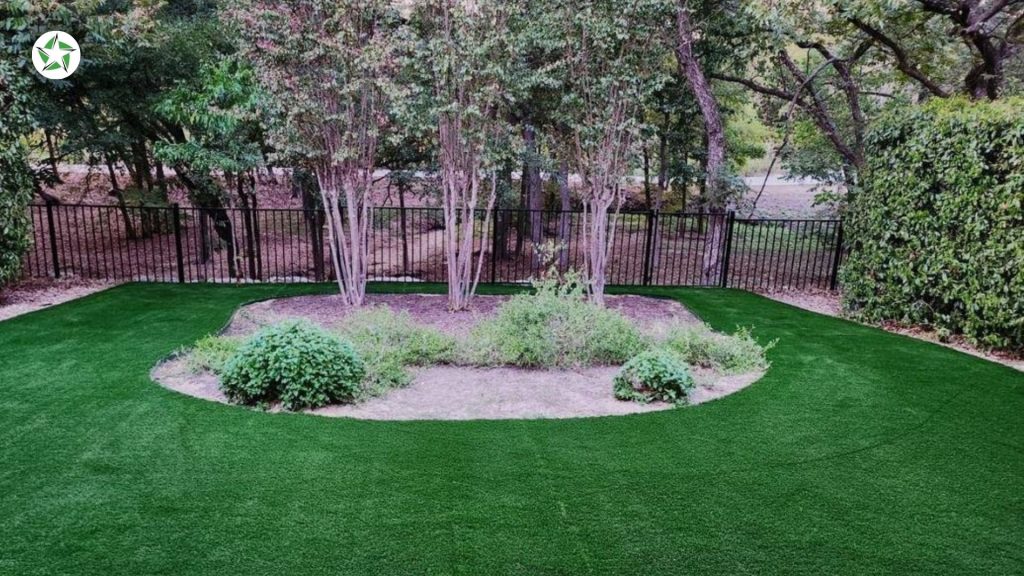
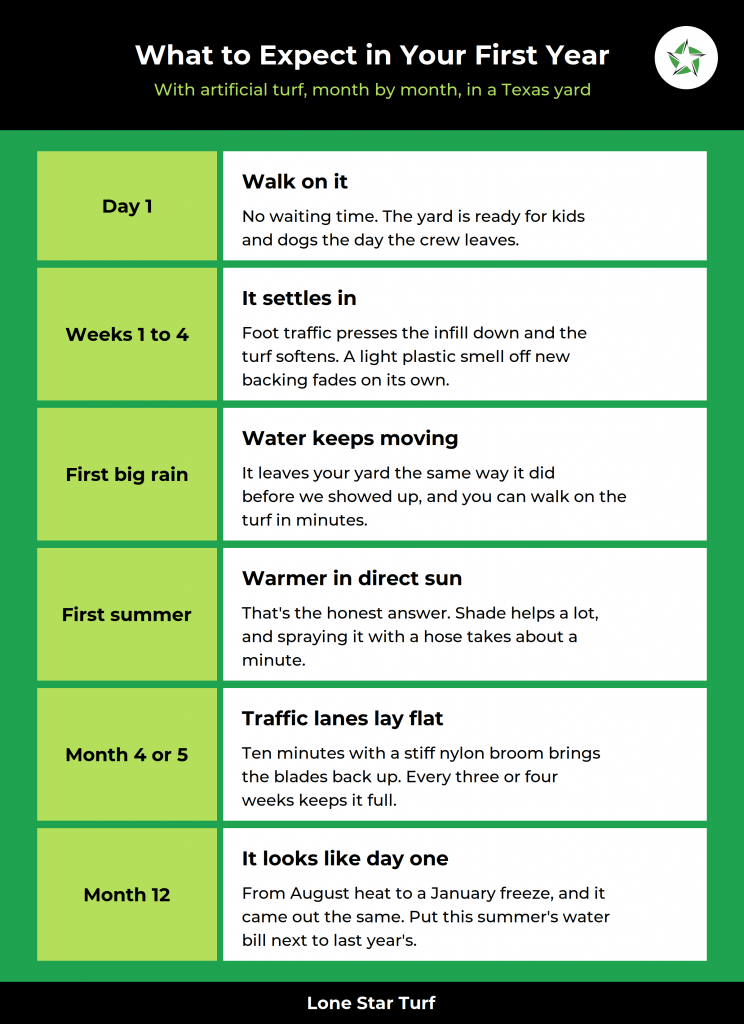
There’s no waiting time before you can walk on your new turf. When the crew leaves, the yard is ready for kids and dogs.
A new install stands tall and feels a little stiff. Foot traffic works the infill down toward the base of the blades over the first few weeks and the surface softens as it goes. Two other things prompt a phone call in the first month, and both are normal. One is a faint plastic smell off new backing on hot afternoons, strongest in the first week or two and gone on its own after that. The other is blade direction. Turf has a grain, so depending on where you stand, one section can read darker than the one beside it. Walk to the other side of the yard and it flips.
Do walk the yard with your project manager before they go. Look at the seams and the edges where turf meets concrete or metal edging, and check the grade while you’re out there. Finding a seam usually takes looking closely on purpose. If something catches your eye, say it that day. We’d rather handle it in week one than in July.
Your First Big Rain
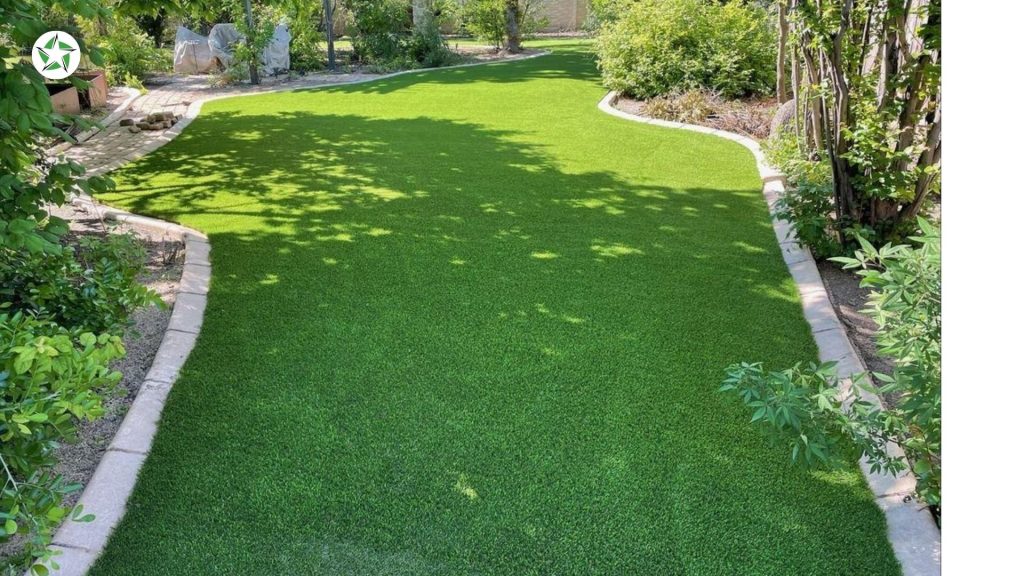
Our turf is perforated, which gives water a path to move underneath it. Water leaves the yard along the same route it took before the install.
That’s why the base matters more here than the turf does. We strip the old grass and roots, then compact two to three inches of decomposed granite and hold a slight grade so water keeps heading the direction it always did. If your yard pooled in one corner beforehand, we sort that out before anything comes off the roll.
What you’ll notice is the timing. A natural grass yard stays soggy for a day after a storm. Turf is walkable in minutes, and the dog comes back inside with clean feet.
Your First Texas Summer
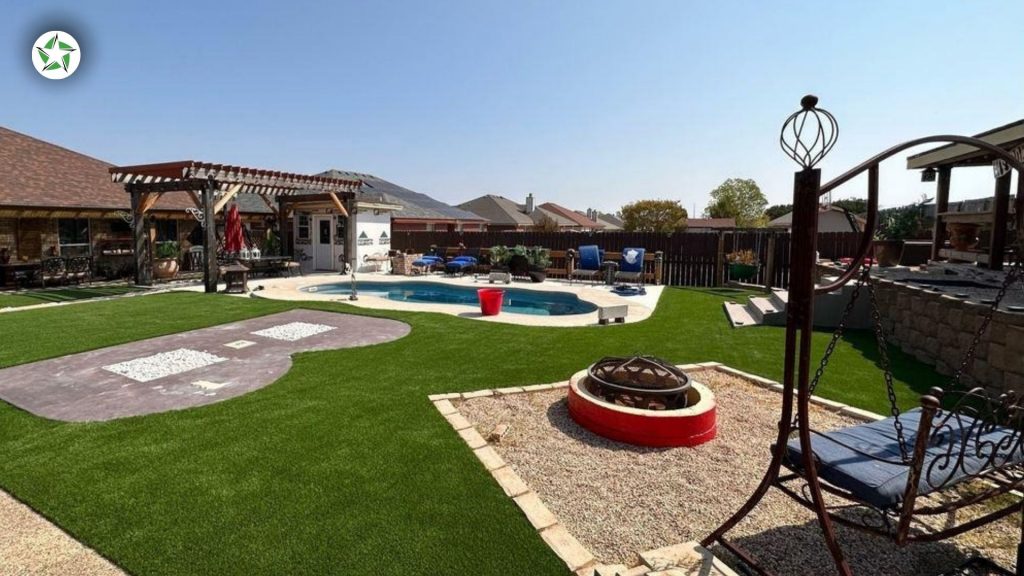
Here’s the straight version: turf runs warmer than natural grass in direct sun. Penn State’s Center for Sports Surface Research has measured synthetic surfaces at 35 to 55 degrees hotter than natural grass on a sunny day. We’re not going to tell you otherwise.
What helps is practical. Shade makes a large difference, so sections under an oak or on the north side of the house stay comfortable through the afternoon. A pass with the hose brings the surface temperature down in about a minute. Several of our products are engineered to shed heat faster than standard synthetic grass, and cooling infill is worth asking about for a yard wide open to the sun.
Summer is also when pool owners get the most out of a turf yard. Bare feet and wet dogs, with nothing to seal ever again. Our pool turf page covers how it compares to pavers and concrete around a deck.
Fall and Winter: The Easy Half of the Year
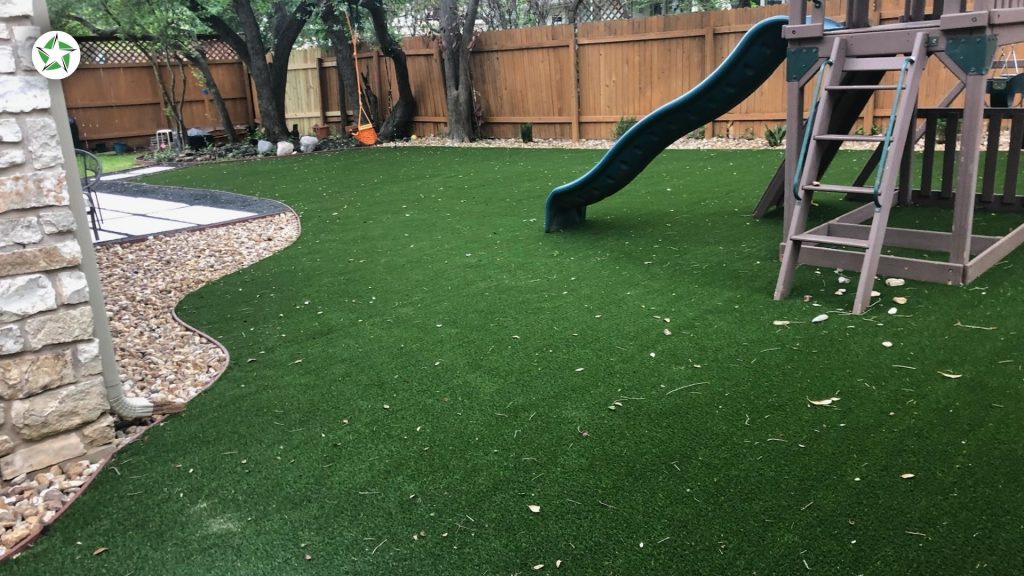
Leaves are the fall job. A leaf blower on a medium setting clears them in a few minutes, angled across the surface rather than straight down so you move debris without moving infill. Skip the metal rake. Cedar season earns an extra rinse or two in December and January.
Winter is where a turf yard starts getting comments from the neighbors. Yours stays green through February while every natural lawn on the street has gone brown and dormant. During a hard freeze the blades stiffen up, then come back once temperatures rise. If ice forms, let it melt instead of chipping at it.
Around Month Five: Ten Minutes With a Broom
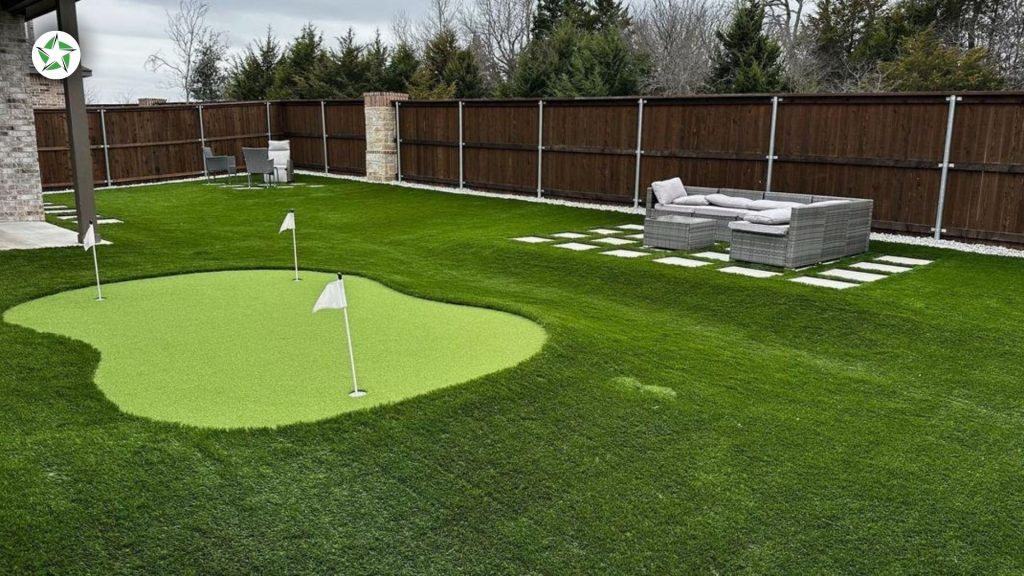
This is the one thing in year one that asks something of you. Somewhere around month four or five, the busiest paths in the yard lay flat. It’s usually the line from the back door to the gate, or the strip the dog runs along the fence. The rest of the yard still looks like installation day.
A stiff push broom with nylon or poly bristles fixes it. Work against the direction the blades lean, spend ten minutes on the flattened lanes, and they stand back up. Every three or four weeks keeps things looking full. The Synthetic Turf Council lists brushing among the core maintenance jobs for professional installations, so it’s the real fix rather than a sales add-on.
If you’d rather hand it off, our turf cleaning and maintenance page covers what a professional visit includes. Most yards do fine with one a year, and heavy pet yards get more out of two.
Pets in Year One

Scoop solids the way you would on real grass, then rinse the spot. Urine passes through the perforated backing rather than sitting on the surface, so it won’t stain the fibers. What it leaves behind is uric acid, and uric acid doesn’t dissolve in water. That’s why an odor can seem handled in March and turn up again on the first humid morning in May. An enzyme cleaner made for turf breaks it down instead of rinsing it around.
A small yard with a couple of large dogs is the setup most likely to hold odor. If that’s yours, rinse more often and ask about antimicrobial infill, which our pet turf installs can include from day one.
What You Won’t Be Doing All Year
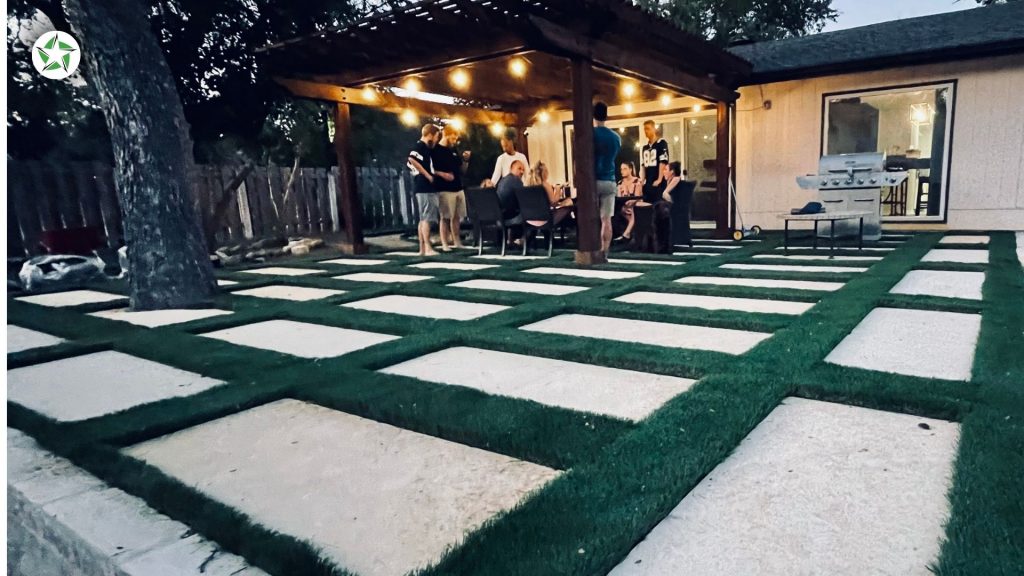
The list of chores that leave your calendar is longer than the list that joins it. Mowing and watering are off the books. Fertilizer and overseeding go with them, along with the October ritual of reseeding whatever August killed.
Weeds drop off sharply without vanishing entirely. Nothing grows up through a compacted granite base and a weed barrier. What you might see is one sprouting in the thin layer of dust that collects on top, and pulling it by hand is the whole fix. Bugs thin out too, since turf holds no standing water or organic matter for mosquitoes and ants to work with.
Then there’s water. Texas A&M AgriLife Extension irrigation specialists report that residential landscape irrigation accounts for roughly half of municipal water use, and that homeowners commonly overwater by as much as 50 percent. Your first July bill is where that number stops being abstract.
The Twelve-Month Mark
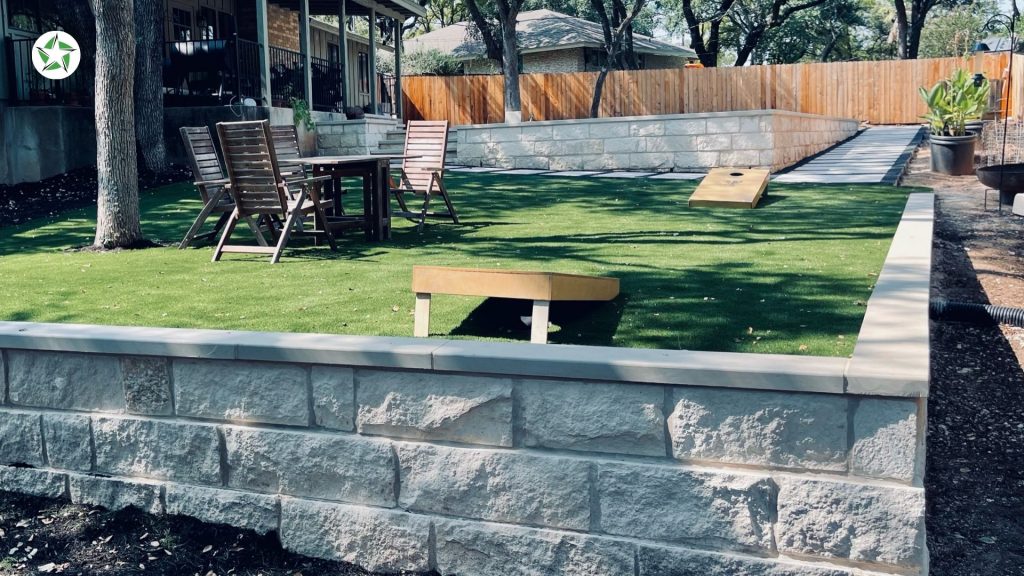
A full Texas cycle is behind you now, from August heat to a January freeze, and the yard came out the other side looking the way it did on install day. That is the whole report.
If you want the numbers, they are simple. Set your water bills from this summer against the summer before the install. Mowing is the easy line, since it went to zero the day the crew left. We’d rather you run your own math than take ours on faith.
Your install carries up to a 16-year warranty on both the product and the workmanship, against an industry standard on labor closer to two years. So if anything does look off, a seam lifting or a low spot holding water after a storm, one call is the whole process. We come out and fix it.
Frequently Asked Questions: Year One With Artificial Turf
What do I need to do to my turf right after installation?
Use it. There’s no cure time and no waiting period. The only thing worth doing in week one is walking the yard with your project manager so anything you notice gets handled while the crew is still nearby.
Is it normal for new turf to have a smell?
A faint plastic smell off new backing on hot afternoons is normal in the first week or two, and it fades on its own. Odor that shows up later in the year is usually pet related and calls for an enzyme cleaner rather than water.
When will my turf start looking flat?
Around month four or five, and only in the lanes people and pets use every day. Ten minutes with a stiff nylon push broom against the grain brings the blades back up. Every three or four weeks is plenty.
Does artificial turf get hot in a Texas summer?
It runs warmer than natural grass in direct sun. Shade makes a real difference, some of our products are built to shed heat faster, cooling infill is available, and a quick pass with the hose brings the surface temperature down.
How soon will I see the savings?
The first summer, since irrigation is the biggest line item a turf yard removes. Compare June through September against the same months last year.
Get Your Free Estimate
Year one is when a turf yard stops being a project and becomes the place you use. A backyard in Lakeway and a courtyard at a commercial property follow the same arc. A short settling stretch, then one brushing habit and a pile of weekends handed back.
If you want a straight answer about your specific yard, get a free estimate and we’ll walk it with you. Sometimes grass is the right call for a space, and we’ll say so. Our residential turf page covers installation start to finish, and the Ultimate Guide to Artificial Turf is a good next read.